April 2, 2026 | Case Study

Meshimer – A Case of Transforming Delivery Excellence: Agile Implementation in a Complex SaaS Security Platform

In a high-stakes SaaS environment, Meshimer, a web content security and mobile device management platform, faced critical execution challenges that threatened delivery timelines, stakeholder trust, and team efficiency. When a new project manager assumed leadership, the project suffered from fragmented communication, underutilized tools, and lack of performance visibility. Through a structured transformation anchored in Agile methodology, tool optimization, and data-driven governance, the project evolved into a predictable, transparent, and high-performing delivery system. This case explores the interventions, their impact, and the managerial implications for scaling complex digital projects.

$25 million+

funding raised

300+

Direct jobs created

20k+

local farmers with new or enhanced incomes, due to less risk and market fluctuations

On this page:

Executive Summary

In a high-stakes SaaS environment, Meshimer, a web content security and mobile device management platform, faced critical execution challenges that threatened delivery timelines, stakeholder trust, and team efficiency. When a new project manager assumed leadership, the project suffered from fragmented communication, underutilized tools, and lack of performance visibility.

Through a structured transformation anchored in Agile methodology, tool optimization, and data-driven governance, the project evolved into a predictable, transparent, and high-performing delivery system. This case explores the interventions, their impact, and the managerial implications for scaling complex digital projects.

The Situation

Meshimer was designed as a multi-tenant SaaS platform enabling centralized control over diverse edge devices, including network appliances, Windows agents, and mobile devices. The platform required:

  • High-level data security (SSL/TLS, encryption at rest)
  • Role-based access control (RBAC) across tenants
  • Real-time monitoring and analytics dashboards
  • A seamless administrative interface

Despite strong technical architecture, execution inefficiencies hindered progress.

Company Background And Profile

Meshimer is an emerging Software-as-a-Service (SaaS) platform designed to deliver integrated web content security and mobile device management (MDM) solutions for modern enterprise environments. The platform enables organizations to centrally manage, monitor, and secure a wide range of connected devices, including network appliances, Windows-based agents, and mobile devices, through a unified administrative interface. Its core value proposition lies in combining robust security controls with ease of use, allowing organizations to enforce real-time web filtering policies, monitor device health and activity, and generate actionable insights through comprehensive dashboards. Built on a multi-tenant architecture, Meshimer ensures scalability while maintaining strict data isolation across clients using role-based access control (RBAC) mechanisms and end-to-end encryption protocols for data both in transit and at rest. The platform integrates key capabilities such as URL filtering, threat monitoring, device enrollment and tracking, remote configuration, compliance enforcement, and advanced analytics, making it particularly relevant for mid-to-large enterprises operating in security-sensitive industries such as IT services, finance, education, and telecommunications. Positioned at the intersection of cybersecurity, endpoint management, and enterprise SaaS solutions, Meshimer differentiates itself through its integrated approach to security and device management, coupled with a strong emphasis on usability and real-time visibility. At the time of this case, the platform was in an active development phase, with cross-functional teams working across frontend, backend, UI/UX, quality assurance, and architecture to build a scalable and commercially viable product. The organization’s strategic priorities included strengthening system reliability, enhancing user experience, ensuring high standards of data security, and improving delivery efficiency to support long-term growth and competitive positioning.

Key Insights

1. Structure Enables Speed

Contrary to common perception, introducing Agile rigor increased—not slowed—delivery velocity.

2. Communication Is a System, Not an Activity

Tools and rituals (Slack, stand-ups) institutionalized alignment rather than relying on individual effort.

3. Data Builds Trust

Dashboards transformed stakeholder relationships by making progress visible and measurable.

4. Planning Reduces Complexity

Upfront backlog grooming and requirement clarity significantly reduced downstream inefficiencies.

The Decision Point

Despite significant improvements, the project team faces several forward-looking questions:

  1. How can estimation accuracy be further improved to minimize underperformance gaps?
  2. Which KPIs should be prioritized as the project scales?
  3. How can this Agile model be replicated across other projects with varying complexity?
  4. What governance mechanisms are required to sustain performance without increasing managerial overhead?
  5. How can stakeholder reporting evolve from descriptive to predictive analytics?

Executive Brief
This case is best suited for courses in Project Management, Agile & Digital Transformation and Operations Management. It enables discussion on agile implementation in real-world contexts, and change management in technical teams and the role of data in leadership and governance

Exhibits

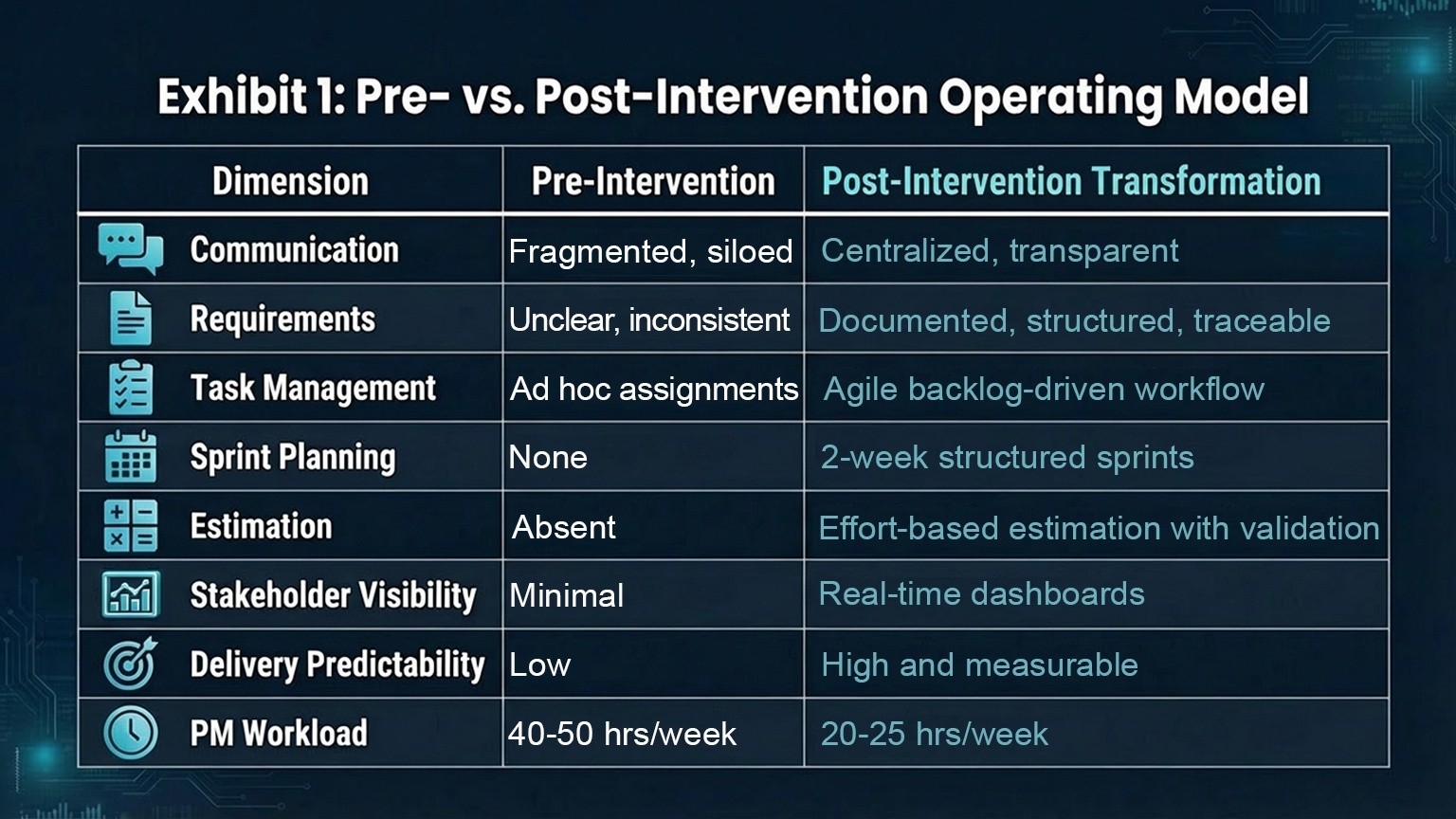
Exhibit 1: Pre- vs. Post-Intervention Operating Model

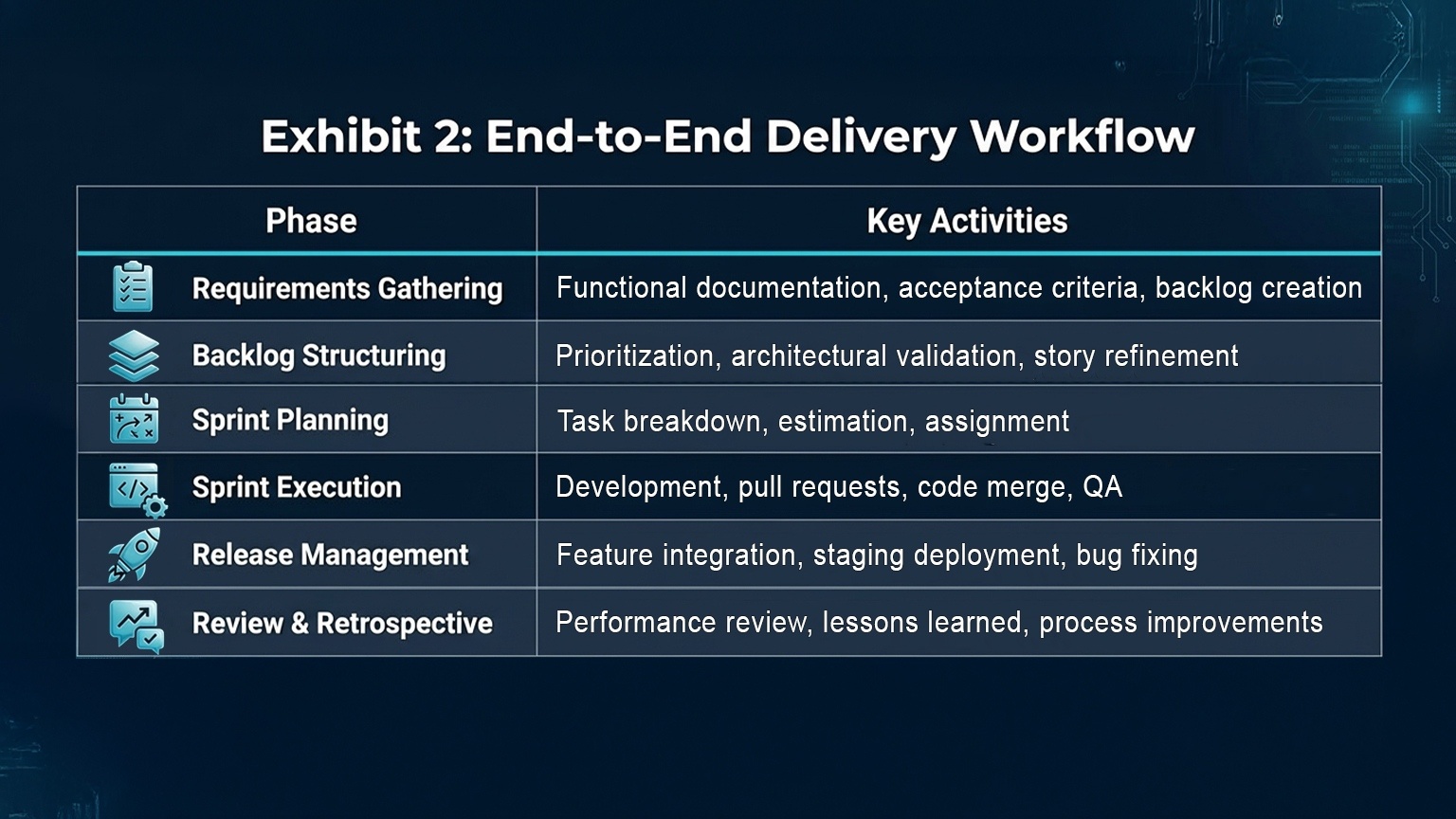
Exhibit 2: End-to-End Delivery Workflow

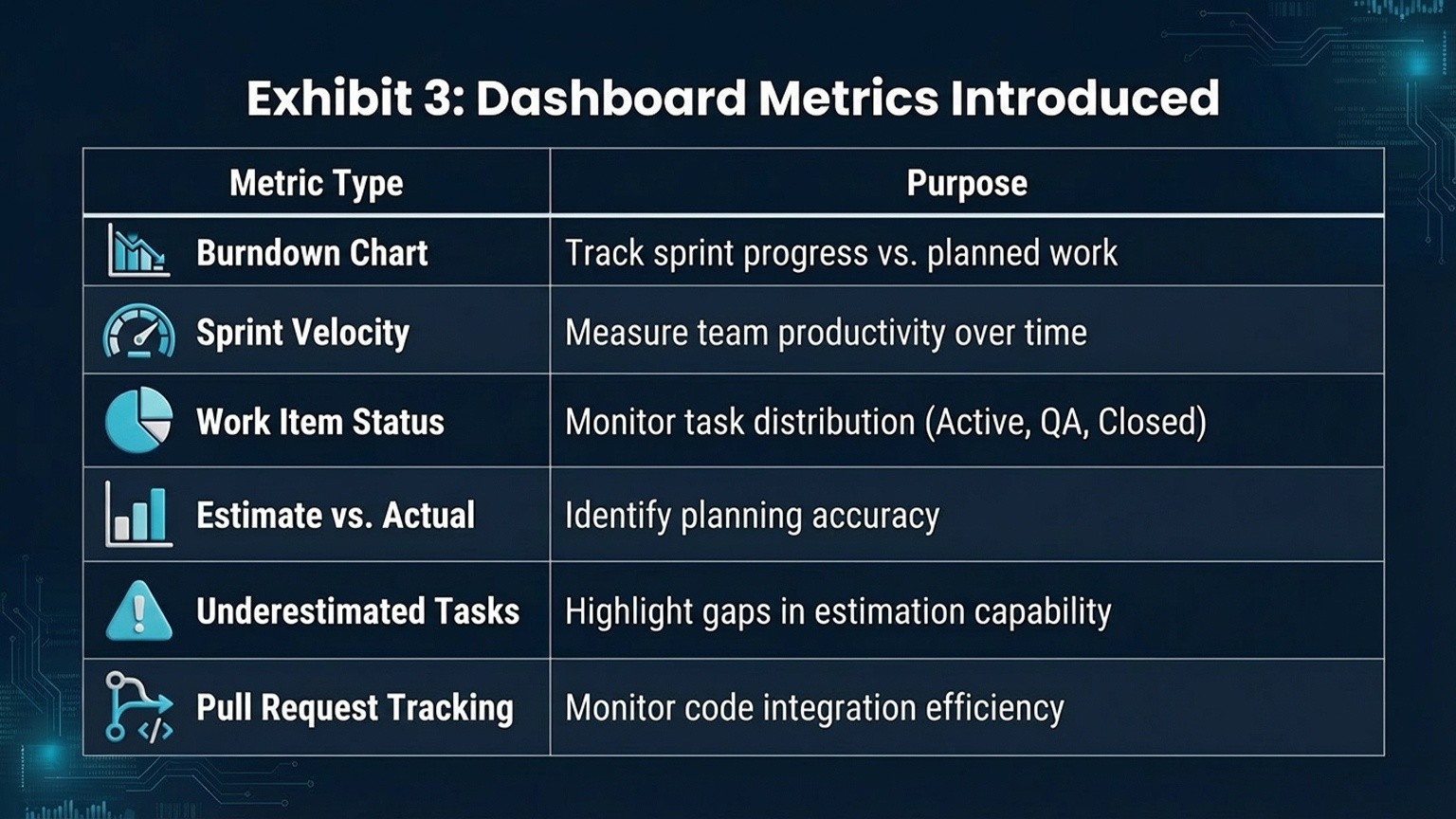
Exhibit 3: Dashboard Metrics Introduced

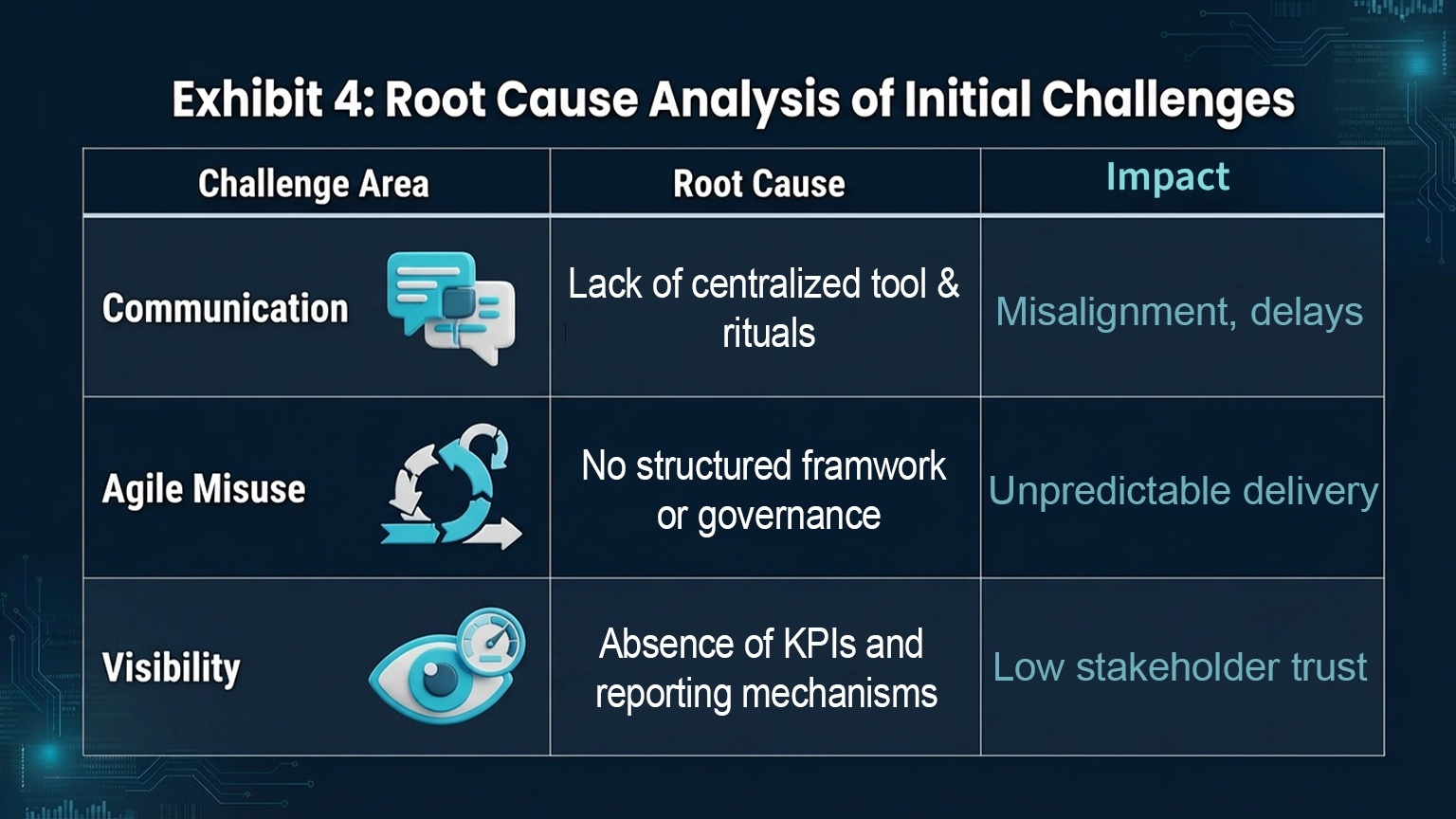
Exhibit 4: Root Cause Analysis of Initial Challenges

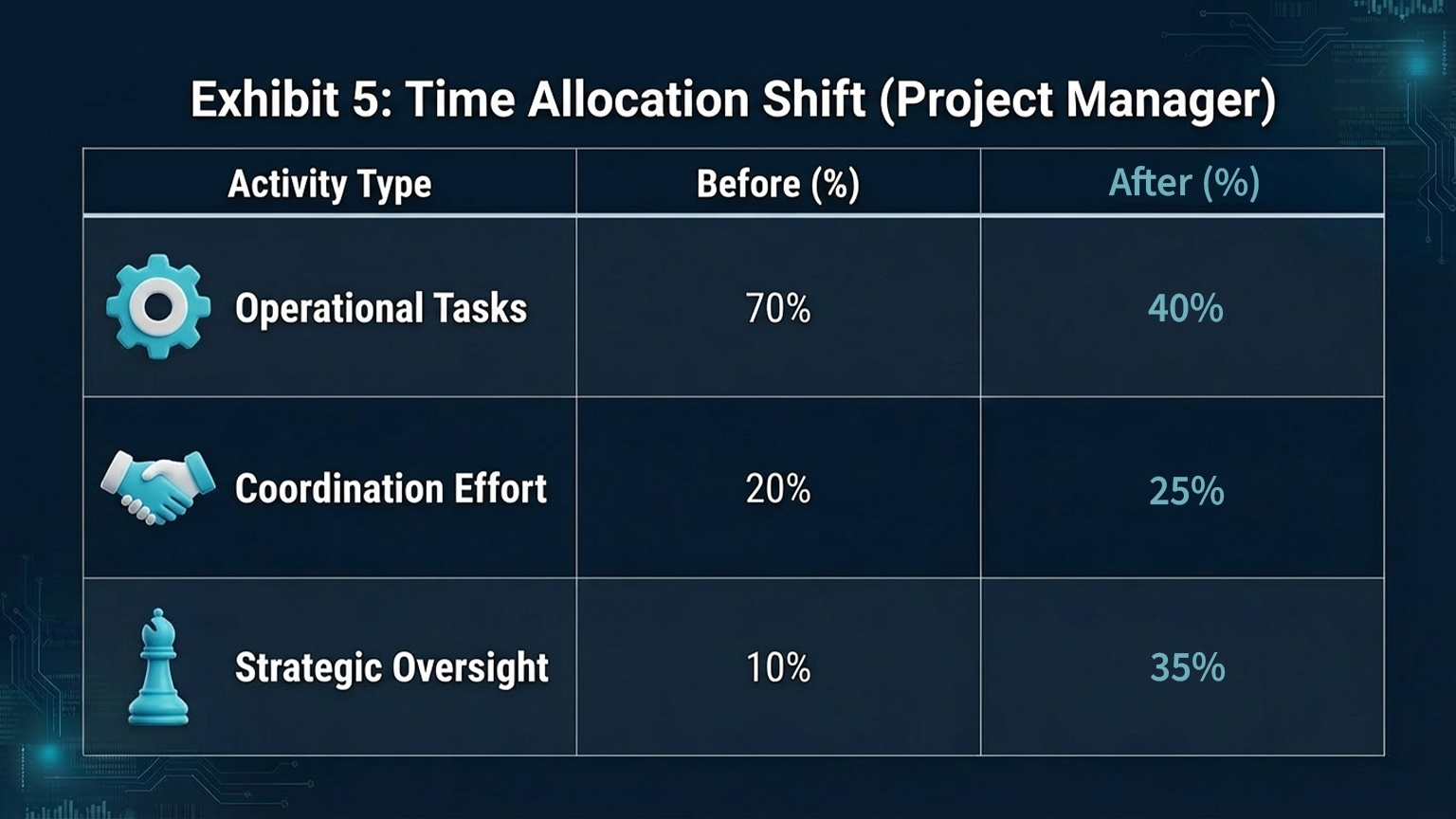
Exhibit 5: Time Allocation Shift (Project Manager)

Insight: Agile systems reduced operational burden, enabling strategic leadership.

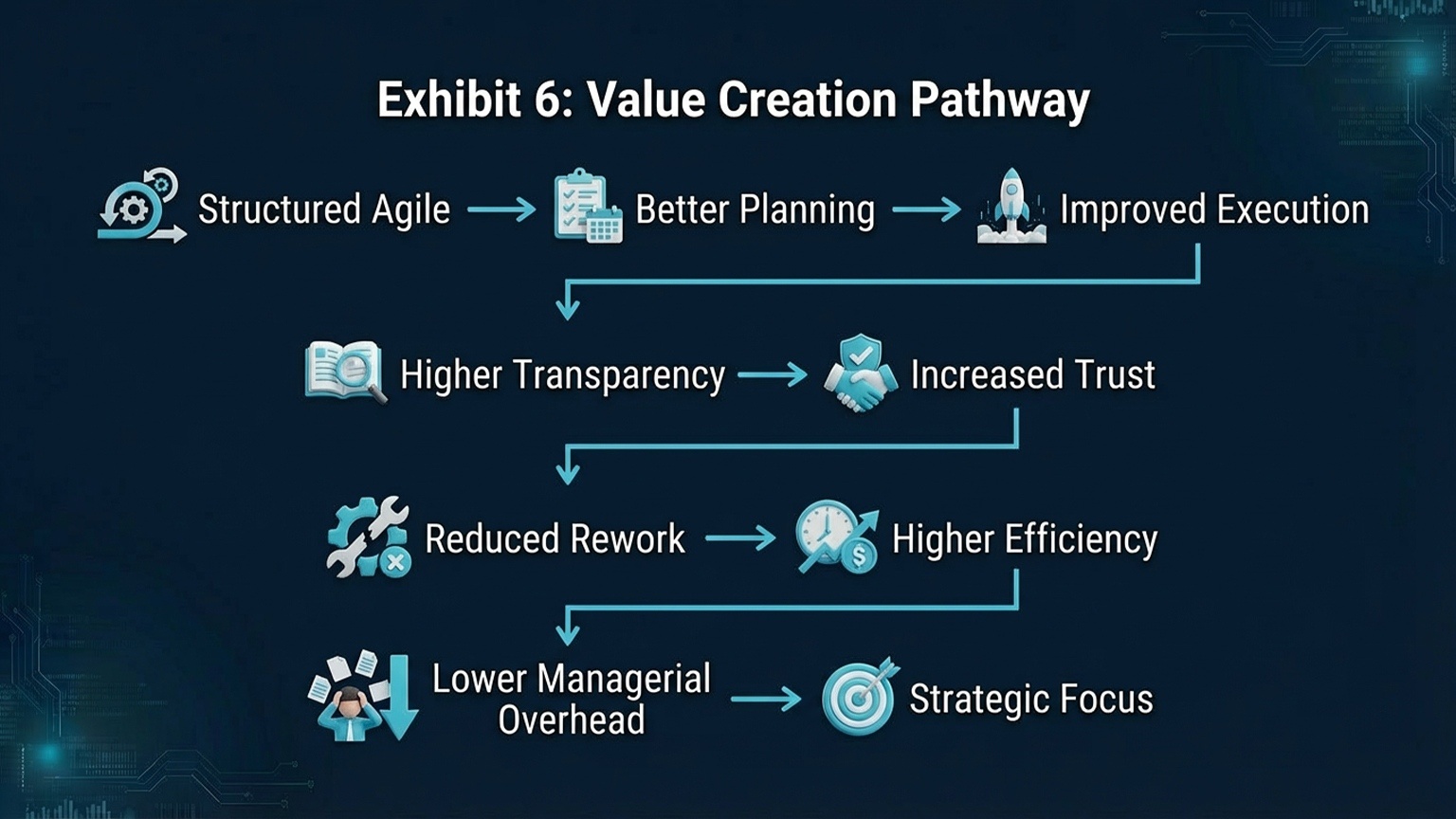
Exhibit 6: Value Creation Pathway

The Opportunity

The Challenge

Upon taking charge, the project manager identified three systemic breakdowns:

1. Fragmented Communication and Misaligned Requirements

Cross-functional teams operated in silos, leading to:

  • Conflicting interpretations of requirements
  • Duplication of work
  • Frequent delays

There was no centralized “single source of truth.”

2. Misuse of Agile Infrastructure

Although Azure DevOps was in place, it was reduced to a task tracker. Thereby, there was no backlog management, no sprint planning, or estimation and specifically no release coordination

Work allocation was reactive rather than strategic, resulting in inconsistent delivery.

3. Lack of Performance Visibility

Stakeholders lacked transparency due to the absence of KPIs, no progress dashboards and very limited structured reporting. This led to declining confidence and weak governance.

Approach

The Intervention

A three-pronged transformation strategy was implemented:

A. Building a Communication Backbone

To eliminate silos and improve alignment:

  • A centralized communication platform (Slack) was introduced
  • Dedicated channels for each function (Frontend, Backend, QA, UI/UX)
  • Daily stand-ups ensured continuous alignment
  • Sprint planning and retrospectives institutionalized feedback loops

Impact:
Communication shifted from fragmented and reactive to transparent, traceable, and proactive.

B. Institutionalizing Agile in Azure DevOps

The project transitioned from ad hoc execution to structured Agile delivery:

  • Creation of Epics → Features → User Stories → Tasks hierarchy
  • Formal backlog grooming and prioritization
  • Sprint-based planning (2-week cycles)
  • Estimation-driven workload allocation

A structured workflow was introduced:

  1. Requirements documentation and backlog creation
  2. Technical validation and decomposition
  3. Sprint planning and task assignment
  4. Controlled execution with branching, QA, and release cycles

As a result the delivery became predictable, measurable, and scalable.

C. Driving Transparency through Data

To rebuild stakeholder trust:

  • Real-time dashboards were introduced, including the burndown charts, the sprint velocity and work item status tracking
  • Introduction of estimate vs. actual analysis
  • “Underestimated Tasks” dashboard for continuous improvement
  • End-of-sprint executive summaries

The impact was seen in Decision-making, which shifted from intuition to data-driven governance.

The transformation produced measurable improvements:

Operational Efficiency

  • Reduced misalignment across teams
  • Improved code quality and delivery consistency

Predictability and Planning

  • Reliable sprint commitments
  • Increased estimation accuracy over time

Stakeholder Confidence

  • Enhanced visibility into progress and risks
  • Strengthened trust through transparent reporting

Leadership Leverage

  • Project manager workload reduced from 40–50 hours to 20–25 hours/week
  • Shift from operational firefighting to strategic oversight
The Impact

The transformation produced measurable improvements:

Operational Efficiency

  • Reduced misalignment across teams
  • Improved code quality and delivery consistency

Predictability and Planning

  • Reliable sprint commitments
  • Increased estimation accuracy over time

Stakeholder Confidence

  • Enhanced visibility into progress and risks
  • Strengthened trust through transparent reporting

Leadership Leverage

  • Project manager workload reduced from 40–50 hours to 20–25 hours/week
  • Shift from operational firefighting to strategic oversight