
February 19, 2026 | Case Study

US Denim Mills: Strengthening Workforce Resilience Through On-Site Childcare

US Denim Mills—one of Pakistan’s leading sustainable textile exporters—faces a growing challenge: rising attrition among women returning from maternity leave and tightening expectations from international buyers on workplace welfare standards. The organization is evaluating the creation of an on-site child day care facility, a move that aligns with its ESG commitments but carries operational and financial implications.

$25 million+

funding raised

300+

Direct jobs created

20k+

local farmers with new or enhanced incomes, due to less risk and market fluctuations

On this page:

A decision on this initiative will determine whether US Denim strengthens its position as a “value-aligned” strategic supplier in the global apparel supply chain—or risks falling behind emerging norms in worker welfare and social compliance.

  1. Company Overview

Industry Positioning

Founded in 2003 and headquartered in Lahore, US Denim Mills supplies premium, sustainable denim fabrics to major global brands including Levi’s, H&M, Zara, Mango, Target, and Primark.
The company operates under the US Group and has differentiated itself via:

  • Vertically integrated production
  • Advanced eco-friendly technologies (laser finishing, ozone wash, recycled fibers)
  • Strong ESG performance and compliance certifications (SEDEX, WRAP, OEKO-TEX, ISO 9001, GOTS)

Workforce & Culture

US Denim employs 1600-1800 workers, including 35% women, with long-standing investments in employee welfare:

  • Subsidized transport and meals
  • In-house medical facility
  • Scholarships for employees’ children
  • Female Leadership Program (FLP)
  • Mental health initiatives
  • Skill certification and worker upskilling

The company is recognized by the Pakistan Business Council for SDG 5 and SDG 8 alignment.

  1. The Emerging Challenge

Attrition Risk

Internal HR data highlights a critical issue:

Female employees returning from maternity leave exhibit disproportionate attrition, mainly due to lack of safe and affordable childcare.

Buyer Expectations

Recent European buyer audits flagged the absence of on-site childcare as a gap in social compliance—raising reputational and business continuity risks. Global brands increasingly evaluate suppliers on worker well-being, gender inclusion, and ESG performance.

Proposed Initiative

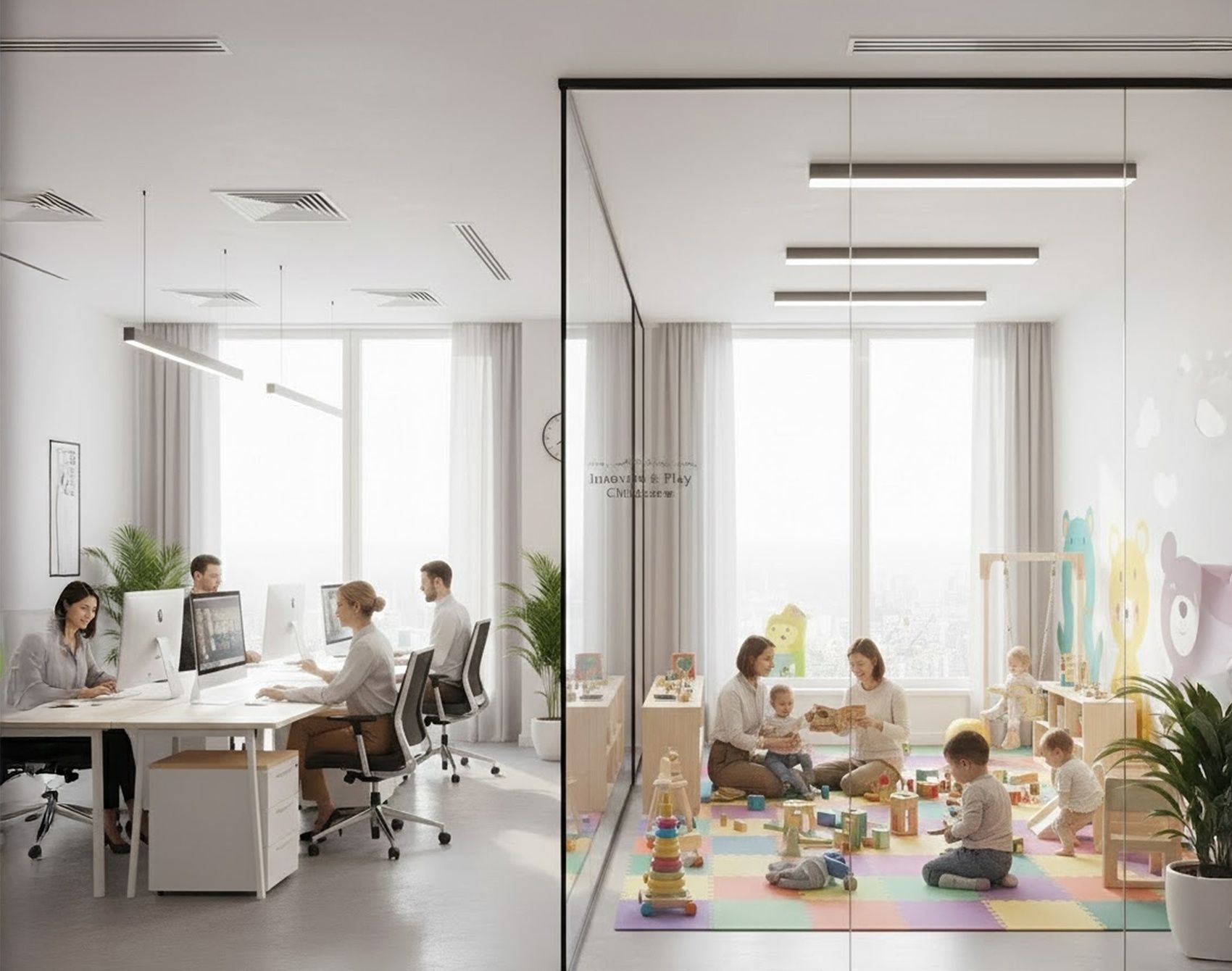
The CSR department proposes converting an underutilized administrative block into a state-of-the-art day-care center, including:

  • Certified childcare staff
  • Early-learning resources
  • On-site medical support
  • Safe, fully monitored premises

Estimated cost:

  • Setup: PKR 15M (~USD 55,000)
  • Annual operating: PKR 6M (~USD 22,000)

Current Setup of the Child Care Facility

  1. Leadership Alignment & Tensions

A cross-functional leadership meeting reveals the divided—but constructive—perspectives:

HR Manager (Nazish Ayub) and GM HR and Admin (Mr. Ameer Saeed)  

  • Advocates strongly for the initiative
  • Frames the issue as a strategic talent-retention imperative
  • Highlights the hidden costs of losing trained female supervisors

CSR Director

  • Emphasizes ESG, brand equity, and global buyer alignment
  • Cites regional benchmarks (Bangladesh competitor improved female retention by 20%)

Finance Director

  • Concerned about near-term cost pressures
  • Cites raw material price volatility and slower post-COVID orders
  • Acknowledges long-term strategic value but weighs budget constraints

Legal Advisor

  • Notes that though childcare isn’t yet legally mandated, emerging policies suggest future regulation
  • Argues for proactive compliance to mitigate future risk

Head of Operations

  • Raises logistical concerns—noise, security, integration with production lines
  • Seeks detailed operational planning before approval

Production Manager

  • Supports the proposal
  • Notes the operational cost of losing skilled women supervisors
  • Believes both male and female employees would value the amenity
  1. Strategic Lens

Stakeholder Theory (Freeman, 1984)

The initiative serves multiple stakeholders:

  • Employees: Increased retention, reduced stress, higher productivity
  • Buyers: Stronger ESG alignment and supply chain transparency
  • Communities: Support for working mothers and child development
  • Shareholders: Long-term stability, lower retraining costs, enhanced reputation

Worker-Driven Social Responsibility (WSR)

The project aligns with global WSR trends, shifting CSR from charity to worker empowerment and shared accountability.

  1. Strategic Case for On-Site Childcare
  2. Long-Term Strategic Advantages
  1. Talent Retention & Productivity
    • Lower attrition costs (training, replacement, downtime)
    • Greater female workforce participation → stronger diversity pipeline
    • Supports FLP and succession planning
  2. Reputation & Brand Value
    • Enhances position as a socially responsible, future-ready supplier
    • Differentiates US Denim in competitive export markets
  3. Employee Engagement & Culture
    • Boosts morale and loyalty
    • Reinforces identity as a purpose-driven organization
  4. Operational Continuity
    • Reduced absenteeism among parents
    • More stable shift planning and line management
  1. International Reputation & Buyer Compliance
  • Meets rising ESG and gender-inclusion standards from global apparel brands
  • Strengthens scores in audits and sustainability reporting
  • Positions US Denim as a partner aligned with SDG 3, SDG 5, and SDG 8
  • Helps secure long-term buying contracts from EU and North American brands
  1. Financial & Operational Trade-Offs

Costs

  • Setup and recurring expenses
  • Space reallocation
  • Required staffing and operational oversight

Benefits

  • Lower turnover costs
  • Reduced recruitment and training spend
  • Higher productivity from retained skilled employees
  • Enhanced buyer trust → potential for repeat orders and preferred-supplier status

The Legacy Files View:
Given the low capital outlay relative to export revenue, the investment is modest and strategically justifiable, especially considering compliance and reputational risks.

  1. Stakeholder Winners & Losers

Winners

  • Women employees: Reduced barriers to workforce participation
  • Children: Access to early education and safe care
  • Management: Improved workforce stability and talent pipeline
  • Global buyers: Stronger ESG-aligned supply-chain partner
  • US Group: Enhanced group-wide sustainability profile

Potential Losers

  • Short-term financial flexibility: Capital temporarily allocated to welfare infrastructure
  • Operations team: Additional planning and facility management coordination

Overall, the benefits substantially outweigh the costs.

  1. Decision Point

The HR manager poses the decisive question:
“Are we prepared to invest in something that may not boost quarterly profits, but will strengthen our reputation, stabilize our workforce, and define who we are for the next decade?”

Discussion Questions

  1. What long-term strategic advantages does on-site childcare offer US Denim Mills?
  2. How does this initiative enhance international reputation and ESG alignment?
  3. What financial and operational trade-offs must the company manage? Are they defensible?
  4. From a stakeholder theory lens, who benefits and who bears the cost?
  5. If you were the HR Manager, would you approve the proposal? Why?