

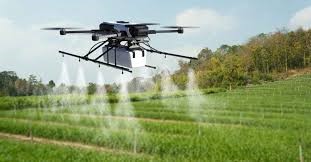
By 2025, AgriSky Technologies, founded in 2016 in Lahore, had become one of Pakistan’s most promising agritech companies. Specializing in agricultural drones, the firm’s flagship Khadim-X Series supported high-precision spraying, GPS-guided flight paths, and rugged designs tailored for local crop conditions in Punjab and Sindh
With rising climate stress, water scarcity, and pest outbreaks, Pakistani farmers increasingly sought digital solutions to protect yields. AgriSky grew rapidly, serving 42,000 acres annually and partnering with progressive farms, corporate growers, and agricultural service providers
But the market began to shift
Industry Dynamics in 2025
Farmers demanded:
Meanwhile, competition intensified—not from other drone manufacturers, but from traditional tractor boom sprayers and handheld pumps, whose operators lowered prices to retain farmers, despite risks of over-spray, crop burn, soil compaction, and health hazards. The shift accelerated when low-cost local service providers began offering tractor-based spraying at PKR 450–550 per acre, significantly undercutting AgriSky’s PKR 750 per acre (drone)
As a result:
AgriSky leadership identified four critical challenges:
Competitors (local agritech startups) introduced AI-enabled detection models.
AgriSky relied on legacy imaging without real-time pest hotspot detection.
Mid-size farmers saw drones as suitable only for export-level citrus and corporate farms.
Turning Point
In late 2025, CEO Amir Saeed initiated a strategic reset. The objective was clear:
“If drone spraying cannot beat tractors on cost, it must beat them on value.”
The executive team outlined four strategic pathways:
AgriSky launched a comprehensive transformation—technology-first, cost-focused, and farmer-centric.
AgriSky conducted a detailed tear-down of its cost structure and found inefficiencies in:
A new Agri Rapid Innovation Cell was created, combining:
Delivered Within 10 Months
Technical Impact
AgriSky reframed its narrative around:
“Sasta nahi — Zyada Munafa.” (“Not the cheapest—But most profitable”)
Key actions:
Shift in Perception
Farmers began to evaluate true cost, not only per-acre price.
AgriSky signed partnerships with:
These alliances expanded AgriSky’s reach to mid-size farms (25–80 acres)—a previously underserved segment.
Cost Comparison Scenario (Core Case)
Assumption: Cotton Field – 100 Acres
| Metric | Traditional Tractor/Handheld | AgriSky Drone (Post-Transformation) |
| Cost per acre | PKR 500 | PKR 610 |
| Chemical usage | 100% baseline | 75–82% (18–25% savings) |
| Crop damage | 3–6% (wheel compaction, overlap) | <1% |
| Human exposure | High | Zero |
| Time per 100 acres | 2 days | 3–4 hours |
| Yield impact | Neutral or negative | +12–16% |
| Total season cost | PKR 50,000 | PKR 61,000 |
| Season revenue impact | – | +PKR 150,000 to 190,000 |
Gross margin improved by 8 percentage points
CEO Amir Saeed noted:
“We stopped competing on price. Instead, we competed on yield and precision.
Once farmers saw the numbers, the choice became clear.”
AgriSky aims to deepen its leadership in precision agriculture by:
The long-term vision:
To become Pakistan’s leading aerial agritech platform—not just a drone company
Discussion Questions
Given the cost comparison between drone spraying (PKR 610/acre) and traditional tractor spraying (PKR 500/acre), what factors should a mid-size Pakistani farmer consider before deciding which method delivers higher long-term profitability and yield stability?
What are the key barriers preventing widespread adoption of drone-based spraying in Pakistan, and which strategic levers (pricing, financing, partnerships, or technology) should AgriSky prioritize to accelerate farmer adoption?
Traditional machinery remains cheaper and more familiar to farmers. How can AgriSky reposition its offering to compete not on cost but on value, precision, and yield improvement? What messaging and ecosystem partnerships would strengthen this shift?
AgriSky invested heavily in real-time detection and AI-based variable-rate spraying. Should the company continue prioritizing advanced features, or shift focus toward lowering per-acre costs to match tractor services? What trade-offs are involved?
Which segments—smallholders, mid-size farmers, corporate agriculture, orchards, or sugar mills—present the strongest growth opportunity for AgriSky in Pakistan? How should the company tailor its service model, financing options, and technology to penetrate each segment?


Imran Ali Khan and Zeeshan Ali Khan were two brothers.